
Roofing advice is everywhere, but some commonly repeated statements are incomplete or simply wrong. For households in Utica, NY, understanding the difference matters because winter snow, ice, wind, freeze-thaw cycles, and older housing stock can all affect how a roof performs.
Does a roof need to leak before it needs attention?
No. A roof can have developing problems long before water reaches the ceiling.
Missing or lifted shingles, exposed fasteners, damaged flashing, dark roof-deck areas, sagging gutters, and deteriorated chimney joints may allow moisture to enter gradually. Insulation and attic materials can absorb water before a visible stain appears indoors.
A small ceiling mark also does not always identify the exact source. Water can travel along rafters, roof decking, insulation, or wall framing before appearing inside. The visible stain may be several feet away from the original opening.
Useful warning signs include:
- Damp or musty attic insulation
- Daylight visible through the roof deck
- Rust around nails or metal components
- Peeling paint near upper walls or ceilings
- Granules collecting in gutters or downspouts
- Repeated staining after snow or wind-driven rain
Are all roof leaks caused by damaged shingles?
No. Shingles are only one part of a roof system, and many leaks begin at transitions or penetrations.
Common trouble areas include chimney flashing, plumbing vent boots, skylights, valleys, roof-to-wall intersections, drip edges, and areas around dormers. Ice dams can also force meltwater beneath roofing materials even when the shingles appear intact.
In older homes, the roof covering may still look reasonably uniform while the underlying flashing, sheathing, or underlayment has aged considerably. A roof inspection should consider the entire drainage system rather than focusing only on the visible shingles.
Does a new roof eliminate maintenance?
No. A new roof still needs observation and basic care.
Roofing materials can be damaged by fallen branches, high winds, animals, clogged drainage, improper attic conditions, and foot traffic. New construction can also experience problems if flashing, ventilation, or drainage details were not installed correctly.
Routine maintenance does not mean walking on the roof. Safer observations can be made from the ground, attic, windows, or a ladder positioned only for a limited visual check. Look for changes after major storms and before or after winter.
Keeping gutters and downspouts clear is especially useful because backed-up water can affect fascia boards, eaves, soffits, and the roof edge.
Do more attic vents always make a roof healthier?
No. Ventilation must be balanced and correctly arranged.
A typical attic ventilation system works by allowing air to enter through lower intake areas and leave through higher exhaust openings. Adding exhaust vents without enough intake air can reduce effectiveness. Blocking soffit vents with insulation can also prevent the intended airflow.
Ventilation is not a substitute for air sealing and insulation. Warm household air leaking into a cold attic can carry moisture, raise roof-deck temperatures, and contribute to frost or ice-dam problems. In winter, the goal is generally to keep the attic cold and dry while keeping heated indoor air out of it.
New ventilation openings should not be added casually. Cutting through roofing or decking can create new leak paths if the design and flashing are not appropriate.
Are ice dams mainly a gutter problem?
Not usually. Gutters can affect how water drains, but ice dams generally form because different sections of the roof are at different temperatures.
Heat escaping into the attic can warm upper roof areas and melt snow. The water then flows toward colder eaves, where it refreezes. The resulting ice ridge can hold back later meltwater.
Clear gutters may help water leave the roof edge, but they do not correct heat loss or uneven roof temperatures. Helpful long-term measures may include improving attic air sealing, correcting insulation gaps, maintaining proper ventilation, and addressing areas where warm air enters the attic.
Large icicles are not automatically proof of a dangerous condition, but repeated ice buildup, interior leaks, or heavy snow accumulation deserves attention. Ice should not be chopped away with tools that can damage shingles or roof membranes.
Can a roof support any amount of snow?
No. Roofs are designed for expected structural loads, not unlimited accumulation.
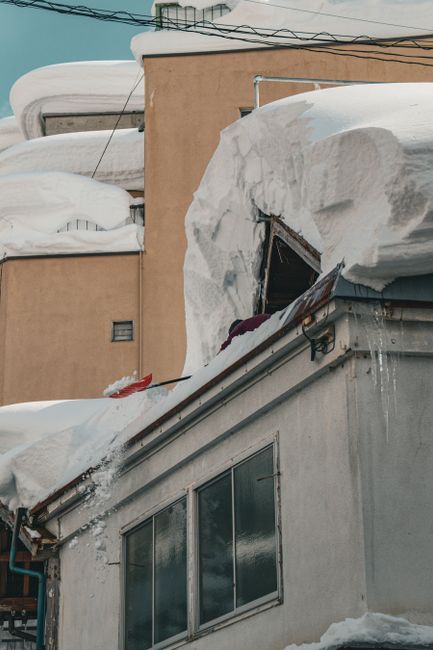
Wet snow is much heavier than fresh, dry snow. Ice layers, drifting, and repeated storms can add substantial weight, particularly in valleys, behind taller roof sections, or near roof-mounted equipment. Warning signs of structural stress may include unusual sagging, cracking sounds, doors that suddenly stick, or new cracks in ceilings and walls.
Snow removal from a roof can be hazardous. Walking on an icy or snow-covered roof may damage roofing materials and create a fall risk. If structural distress or unusually deep accumulation is present, the situation may require prompt evaluation by someone qualified to assess building safety.
Does a steep roof never leak?
No. Steep roofs often shed water and snow more efficiently, but slope does not make them leak-proof.
A steep roof can still leak at flashing, valleys, penetrations, ridge details, or damaged materials. Wind-driven rain may also move beneath shingles, especially where roof edges or flashing are exposed.
Low-slope sections attached to a steeper main roof deserve particular attention. Porches, additions, enclosed entryways, and rear extensions may drain differently and may use different roofing materials. Problems on these sections can be mistaken for failures on the main roof.
Are roof stains always proof that the roof needs replacement?
No. A stain proves that moisture reached the area at some point, but it does not by itself determine the repair needed.
The cause may be an isolated flashing failure, a plumbing vent issue, condensation, an ice dam, or a larger deterioration problem. Some stains are old and inactive, while others indicate continuing moisture.
Before deciding on replacement, it helps to identify whether the roof covering, underlayment, decking, insulation, or interior finish is affected. Repainting a stain without finding the moisture source only hides the evidence temporarily.
Can roofing work be done during any season?
No. Temperature, precipitation, wind, and surface conditions affect roofing work.
Some roofing materials require specific temperature ranges for proper sealing or handling. Snow, ice, and wet decking create safety and installation problems. Cold-weather work may be possible in certain conditions, but it requires materials and methods suited to those conditions.
For homes in Utica, seasonal planning is practical. Spring inspections can reveal winter damage, while late summer and early fall are useful times to address maintenance before snow and freezing temperatures return. Emergency repairs may be necessary at other times, but temporary protection and permanent installation are not always the same thing.
Does a roof’s age tell the whole story?
No. Age is useful context, not a complete diagnosis.
A well-installed roof with good ventilation and regular maintenance may perform differently from a newer roof exposed to poor drainage, repeated storm damage, or attic moisture. Material type, installation quality, roof complexity, sun exposure, tree cover, and previous repairs all influence service life.
The most reliable approach is to judge the roof by its current condition, drainage performance, structural support, and history of problems rather than by age alone. That distinction helps prevent both premature replacement and delayed attention to serious defects.
