

Why roof drainage deserves careful attention
In Utica, NY, a roof drainage system must handle more than ordinary rainfall. Snow accumulation, ice formation, freeze-thaw cycles, spring runoff, and heavy summer storms can all place stress on gutters, downspouts, roof edges, and the ground around a home.
Effective drainage has one basic purpose: move water from the roof to a safe discharge point without allowing it to collect against the roof, siding, foundation, or walkways. A roof can be in generally good condition and still develop leaks or structural problems if water is poorly directed.
Good drainage depends on the entire system working together:
- Roof slope and surface condition
- Gutters and downspouts
- Flashing around roof penetrations
- Eaves and roof edges
- Downspout extensions or underground outlets
- Soil grading around the foundation
- Seasonal maintenance
A problem in any one of these areas can affect the rest of the building.
How should gutters and downspouts be arranged?
Gutters should collect water continuously along the lower edges of sloped roof sections, while downspouts should carry that water away from the building. The exact arrangement depends on roof size, roof shape, slope, and the intensity of rainfall the system must handle.
Long gutter runs need careful planning because water can move slowly or pool if the gutter does not have consistent pitch toward an outlet. Gutters that appear level from the ground may still be draining adequately, but visible standing water after rain is a warning sign.
Downspouts should be positioned where they can handle the amount of water entering the gutter. A single small downspout may not be sufficient for a large roof section, especially during intense storms or rapid snowmelt.
Downspouts should discharge far enough away from the foundation to prevent water from returning along the soil surface. The outlet should not empty directly beside basement walls, window wells, stairs, or areas where ice could form on frequently used walkways.
What seasonal conditions create drainage problems?
The most difficult drainage period may be late winter and early spring, when melting snow can combine with frozen ground. Water may run off the roof normally but have nowhere to soak into the soil. This increases the chance of pooling near the foundation.
Freeze-thaw cycles can also loosen gutter fasteners, open small gaps at joints, and worsen cracks in downspouts. Ice inside or around a drainage component can place considerable weight on the system. Repeated freezing and thawing may cause a minor alignment problem to become a visible sag.
Summer storms create a different challenge. A short, intense rainfall can send a large volume of water into the gutters within minutes. Leaves, twigs, roof granules, and other debris can restrict flow just when the system is under the greatest demand.
A practical seasonal routine includes:
- Checking gutters after major storms
- Looking for sagging or separated joints
- Clearing leaves before freezing weather
- Inspecting downspout outlets after snow removal
- Watching for soil erosion below discharge points
- Checking basement walls and window wells for new dampness
How can homeowners recognize poor drainage?
The most useful clues often appear after rainfall or snowmelt. Water-related damage is not always visible on the roof itself.
Signs of drainage trouble may include:
- Water spilling over the front or back of a gutter
- Gutter sections pulling away from the fascia
- Rusted seams or open joints
- Streaks or dark staining below the roof edge
- Soil washed away beneath a downspout
- Persistent puddles near the foundation
- Damp basement walls or musty odors
- Water entering around basement windows
- Peeling paint or staining on exterior walls
- Ice forming repeatedly in the same location
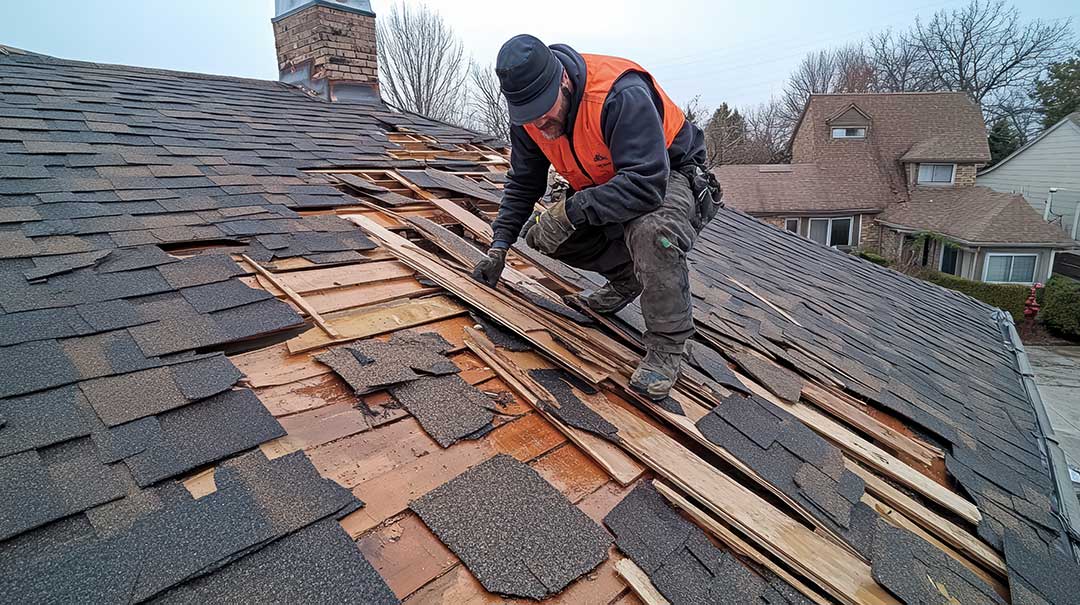
A gutter that overflows in only one area may have a localized blockage, an undersized downspout, or a section with inadequate slope. Overflow along an entire roof edge may indicate a larger design or capacity issue.
Water stains inside an attic or upper floor should not automatically be blamed on gutters. Roof penetrations, flashing, ventilation, ice dams, and wind-driven rain can produce similar symptoms. The location of an interior stain does not always match the point where water entered.
What role does roof design play?
Roof drainage begins before water reaches the gutter. Roof valleys, dormers, chimneys, skylights, and intersecting roof sections concentrate water into specific areas. These locations require properly installed and maintained flashing.
A roof valley can receive water from two sloped surfaces at once. If debris collects there or the valley lining is damaged, water may back up beneath nearby roofing materials. A roof edge with little overhang may also allow water to run behind the gutter or down the side of the building.
Low-slope roof sections require special attention because they drain more slowly than steeply pitched surfaces. Small depressions, blocked drains, or poorly sealed edges can allow water to remain on the roof for extended periods. Standing water adds weight and may accelerate deterioration of roofing materials.
Older housing can present additional challenges. Additions may have been built at different times, creating roof sections that do not drain naturally toward the same location. Gutters may also have been altered, replaced, or partially removed over the years.
Should downspouts connect to underground drainage?
Underground downspout drains can be useful, but they are not automatically better than visible extensions. Buried piping may become blocked by soil, roots, ice, or collapsed sections. If the outlet is hidden or disconnected, water may be discharged close to the foundation without being obvious.
An underground system should have a clear outlet and a way to be inspected or maintained. Water should not be directed toward a neighboring property, public walkway, septic area, or location where it can create erosion or dangerous ice.
In some situations, a visible extension that carries water several feet away from the foundation is easier to monitor and maintain. The best arrangement is the one that reliably moves water away while remaining appropriate for the property’s grading and drainage conditions.
How should roof drainage be maintained safely?
Routine maintenance is usually most effective when performed before problems become visible indoors. Gutters should be checked at least seasonally and after unusual weather, particularly when trees surround the home.
Ladders introduce fall risks, and wet roofing materials can be slippery. Roof surfaces should not be walked on casually, especially during cold weather, after rainfall, or when snow and ice are present. Ground-level observations can identify many drainage problems without climbing.
Maintenance should include:
- Removing leaves and compacted debris
- Checking gutter hangers and visible fasteners
- Examining seams and end caps
- Confirming that downspouts are firmly connected
- Clearing outlets and splash areas
- Looking for cracked or displaced flashing
- Trimming branches that repeatedly drop debris onto the roof
- Monitoring basement and foundation areas after storms
If a drainage problem involves unstable roofing, electrical hazards, significant ice, structural movement, or difficult access, specialized assistance may be necessary for safety. Roof drainage is not only a maintenance issue; water near electrical equipment, steep roof edges, and frozen surfaces can create serious hazards.
What is the most common drainage misconception?
A common misconception is that gutters alone protect a home from water damage. Gutters collect roof runoff, but they do not solve poor grading, damaged flashing, foundation cracks, blocked underground outlets, or water entering through a roof penetration.
Another misconception is that a small leak is harmless if it appears only during heavy rain. Intermittent leaks can still damage insulation, wood framing, ceilings, and interior finishes. In cold climates, moisture that enters an enclosed space may also freeze and expand before becoming visible.
Reliable drainage comes from a connected system: the roof directs water to the edges, gutters carry it to downspouts, outlets move it away from the building, and surrounding soil allows it to drain without returning toward the foundation.
